
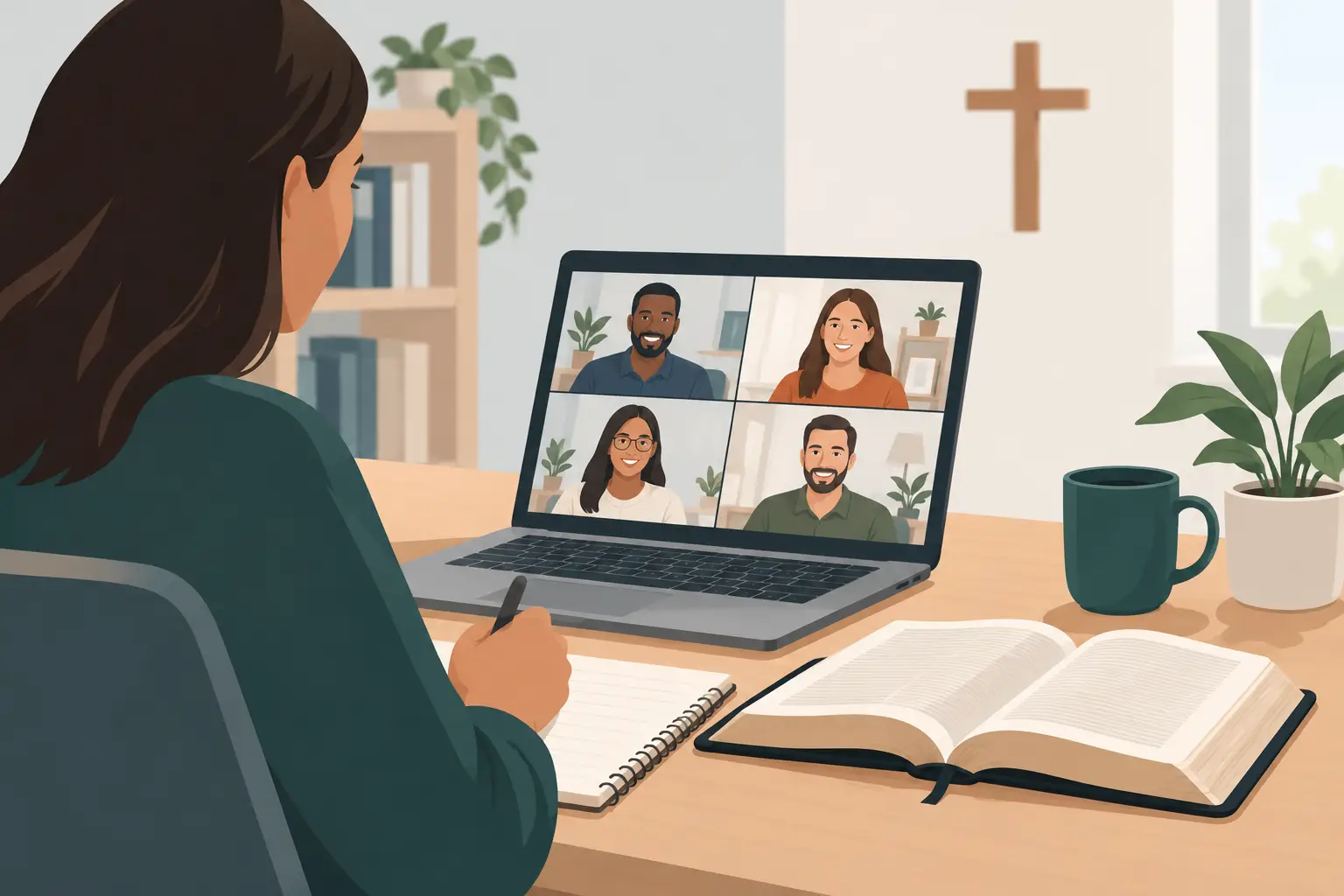
A meaningful Bible study can begin with three people on a video call, each arriving with a different week behind them and the same need for God’s Word. Learning how to start an online Bible study is less about creating a polished programme and more about making a dependable space where people can read, ask, listen and grow together.
Online gatherings remove some barriers. A friend can join after putting children to bed, a student can take part from halls, and people in different towns or countries can open the same passage at the same time. But convenience alone does not create community. A clear purpose, a simple rhythm and thoughtful leadership help a group move beyond occasional conversation into shared Scripture engagement.
Begin with a clear purpose
Before choosing a platform or inviting anyone, decide what kind of gathering you are starting. Your purpose shapes the passages you read, the questions you ask and the people most likely to benefit from joining.
Perhaps you want to help new believers become confident opening the Bible. Perhaps a small group from church wants to stay connected between Sundays. You may be gathering friends who want to work slowly through a Gospel, pray for one another, or understand a difficult biblical theme. Each is a good reason to begin, but trying to do all of them at once can make the study feel unfocused.
Write a one-sentence invitation that explains the aim in everyday language. For example: “We will meet weekly to read Mark’s Gospel, ask honest questions and encourage one another to follow Jesus.” This gives people permission to join without needing prior knowledge, while setting an expectation that the Bible will remain at the centre.
Choose a group that can genuinely connect
A small online group often works best at first. Six to ten people gives everyone room to speak without making the call feel rushed. If more people are interested, consider forming two groups or inviting another person to help facilitate.
Think about who you are inviting. A group with similar life stages may find scheduling easier, but a mix of ages and backgrounds can bring valuable perspectives. What matters most is a shared willingness to show up, read the passage and treat one another with care.
Be clear that no one needs to be a Bible expert. Some members may have read Scripture for years; others may be opening it for the first time. An encouraging study makes room for both. Experienced readers can share insight without dominating, while newer readers can ask questions that help everyone notice what is actually in the text.
Set expectations early
A short set of group agreements protects trust. Ask members to keep personal sharing confidential, allow others time to speak, and disagree graciously when interpretation differs. Encourage people to say, “I am still thinking about this,” rather than feeling pressure to offer a quick answer.
If teenagers are involved, follow your church or organisation’s safeguarding guidance. Use appropriate communication channels, include suitable adult leaders and make expectations clear to parents or carers where necessary.
Pick a simple meeting rhythm
Consistency matters more than ambition. A weekly 60-minute meeting is sustainable for many groups, while a fortnightly gathering may suit people with demanding work or family commitments. Choose a regular day and time, then keep it stable for at least six to eight weeks.
A helpful hour might include a welcome and brief catch-up, reading the passage aloud, discussion, and prayer. You do not need to fill every moment. Silence after a question can feel awkward online, but it often gives people time to reflect rather than respond with the first thought that comes to mind.
Decide how long the study will run before you begin. A six-week series through Philippians or a ten-week journey through a Gospel feels more approachable than an open-ended commitment. At the final session, ask the group whether to continue, take a break or begin a new book together.
Choose a passage plan people can follow
For a new group, start with a book of the Bible rather than a collection of unrelated topics. Reading in sequence gives context and helps people see the bigger story. Mark, Ruth, Philippians, James and 1 John are all accessible places to begin, depending on the group’s interests and experience.
Keep the weekly reading manageable. A short passage studied carefully is usually more fruitful than several chapters rushed through. If the text is especially complex, read it in advance and identify a little background information that will help the group hear it clearly. Avoid turning the meeting into a lecture, though. Your role is to guide people back to the passage, not to supply every answer.
Use questions that move from observation to response. You might ask what stands out, what the passage shows about God, what it reveals about people, and how it could shape life this week. These questions keep the discussion grounded in Scripture while making room for personal reflection.
Use technology to support the study, not distract from it
The best tools are the ones your group will actually use. A video call is useful for face-to-face conversation, while a shared online Bible space can help everyone find the passage, compare translations and continue the discussion between meetings.
Ask members to join a few minutes early for the first session so they can test their microphone and camera. Encourage headphones if background noise is likely. It is also wise to have a simple back-up plan, such as sending the discussion questions in a group message if a call fails.
A dedicated Bible study platform can bring reading, notes and conversation into one place. Revelationary allows members to quickly find verses, mark and save important passages, track reading progress, and add comments or replies around the text. Its free, ad-free and privacy-protected setting can be especially helpful when your group wants to focus on Scripture rather than notifications and distractions.
Not every member will want to use every feature, and that is fine. Make participation straightforward. The technology should lower the barrier to study, not make people feel they need to learn a new system before they can belong.
Facilitate with humility and care
You do not need to have formal theological training to lead an online Bible study. You do need to prepare, listen well and know when to seek help. Read the passage beforehand, pray for the group and choose two or three questions that invite thoughtful conversation.
During the meeting, gently bring the discussion back when it drifts too far from the text. If someone shares a difficult situation, acknowledge it with compassion rather than rushing to solve it. Offer prayer, and where appropriate, encourage them to speak with a trusted pastor, church leader or qualified support service.
There will be times when someone asks a question you cannot answer. A simple, honest response builds trust: “I do not know, but let us look into that and return to it next week.” You can also compare the surrounding verses, consult reliable church teaching or ask a mature believer for guidance. Faithful study is not about pretending to be certain about everything. It is about learning to handle God’s Word carefully together.
Make room for participation beyond the call
The most engaged groups do not treat the video meeting as the only moment Scripture matters. Send the next passage and one reflection question a few days beforehand. Invite members to share a verse that stayed with them or a prayer request during the week.
Keep these messages purposeful. Constant notifications can become another pressure on already busy lives. A small, regular prompt is enough to help people return to the text and remember that they are not studying alone.
Review the group after the first few weeks
After three or four meetings, ask what is helping and what needs to change. Is the meeting time realistic? Are the passages too long? Does everyone have a chance to contribute? Honest feedback is a sign that the group is becoming a shared responsibility, not merely an event one person runs.
You may need to shorten the discussion, add more time for prayer or slow down the reading plan. It depends on the group. The goal is not to copy another Bible study perfectly, but to create a faithful rhythm that helps these particular people meet God in Scripture.
Start simply, welcome people warmly and trust that small acts of faithfulness matter. Open the passage, ask a sincere question, leave space for prayer, and return next week. Over time, an online Bible study can become more than a call on a calendar: it can be a place where God’s Word is remembered, lived and shared.